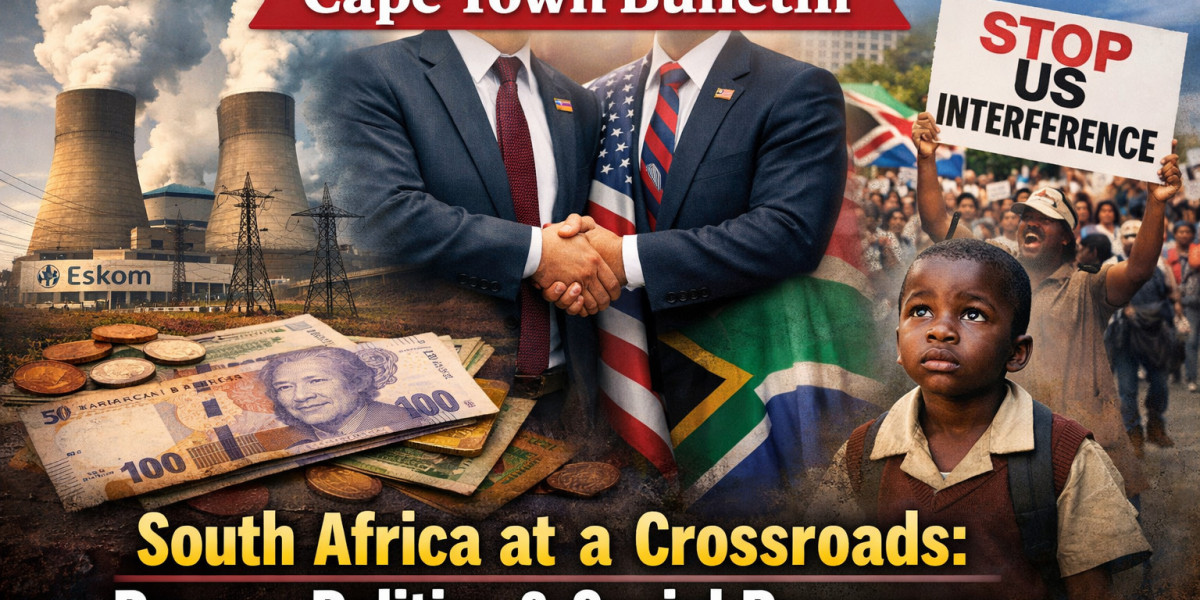

One of the most dominant concerns remains electricity. Eskom’s ongoing financial and operational difficulties continue to ripple through the economy. Reports of a massive regulatory and billing error, estimated at tens of billions of rand, have sparked fears of further electricity tariff increases. For ordinary South Africans, higher power prices translate into higher food costs, transport expenses, and rental pressures. For businesses, especially small and medium enterprises, energy uncertainty undermines planning, discourages investment, and limits job creation. Energy reliability has become not only an infrastructure issue, but a central economic and social challenge.
The electricity crisis also highlights deeper governance questions. Years of load shedding, maintenance delays, and leadership instability have eroded public trust in state-owned enterprises. While government has committed to energy reforms, including increased private sector participation and renewable energy expansion, progress remains uneven. Analysts argue that without stronger accountability, transparent regulation, and long-term planning, South Africa risks repeating cycles of crisis rather than achieving sustainable energy security.
Beyond energy, South Africa’s diplomatic positioning is drawing renewed attention. Recent protests at the US Embassy in Pretoria over Washington’s stance on Venezuela reflect growing public engagement with global politics. Many South Africans view international conflicts through the lens of historical inequality, sovereignty, and resistance to external dominance. These demonstrations suggest that foreign policy is no longer an abstract elite concern, but a topic that resonates with citizens who feel global decisions have local consequences.
The arrival of a new US ambassador-designate adds another layer to this diplomatic moment. Relations between Pretoria and Washington have faced periods of tension, but the United States remains an important trade partner and investor. How both sides manage disagreements while maintaining cooperation on trade, climate change, and security will influence economic prospects. South Africa’s broader balancing act engaging Western economies while strengthening ties with BRICS partners and the wider Global South continues to define its international strategy.
Social issues, meanwhile, remain deeply pressing. Reports of deaths linked to unsafe initiation practices have once again shocked the nation. Despite laws, awareness campaigns, and monitoring initiatives, fatalities persist almost every year. This tragedy exposes the gap between policy and practice, and the difficulty of enforcing safety standards in remote areas. Addressing the issue requires respectful collaboration with traditional leaders, stronger enforcement mechanisms, and sustained community education to ensure cultural traditions do not cost young people their lives.
Education costs are another growing burden for families. Rising prices for school uniforms, transport, and learning materials are pushing the cost of basic education higher each year. For many households, especially those already affected by unemployment or informal work, these expenses force difficult choices. Education is widely seen as South Africa’s most important tool for reducing inequality, yet affordability challenges threaten to widen the gap between rich and poor learners.
There are, however, areas of cautious optimism. Cape Town’s expanding international air connections signal confidence in the city’s role as a tourism and business hub. Increased flight capacity supports hospitality, trade, and investment, while reinforcing South Africa’s links to global markets. Tourism, in particular, remains a vital source of foreign income and employment, offering opportunities for recovery if supported by stable infrastructure and safety.
At a continental level, Africa’s economic story continues to evolve. Green energy projects, digital finance, and regional trade initiatives are reshaping growth prospects. South Africa, with its developed financial system and industrial base, is well positioned to play a leadership role. Yet to do so, it must address domestic constraints from power shortages to skills gaps — that limit competitiveness.
As the year progresses, South Africa faces difficult but necessary choices. Managing electricity reform, protecting vulnerable communities, strengthening education access, and maintaining balanced diplomacy will require decisive leadership and public engagement. The outcomes will shape not only short-term stability, but the country’s long-term development path.
In documenting these interconnected challenges and opportunities, Cape Town Bulletin remains committed to providing clear, informed coverage of the issues shaping South Africa and the wider African continent Cape Town Bulletin.