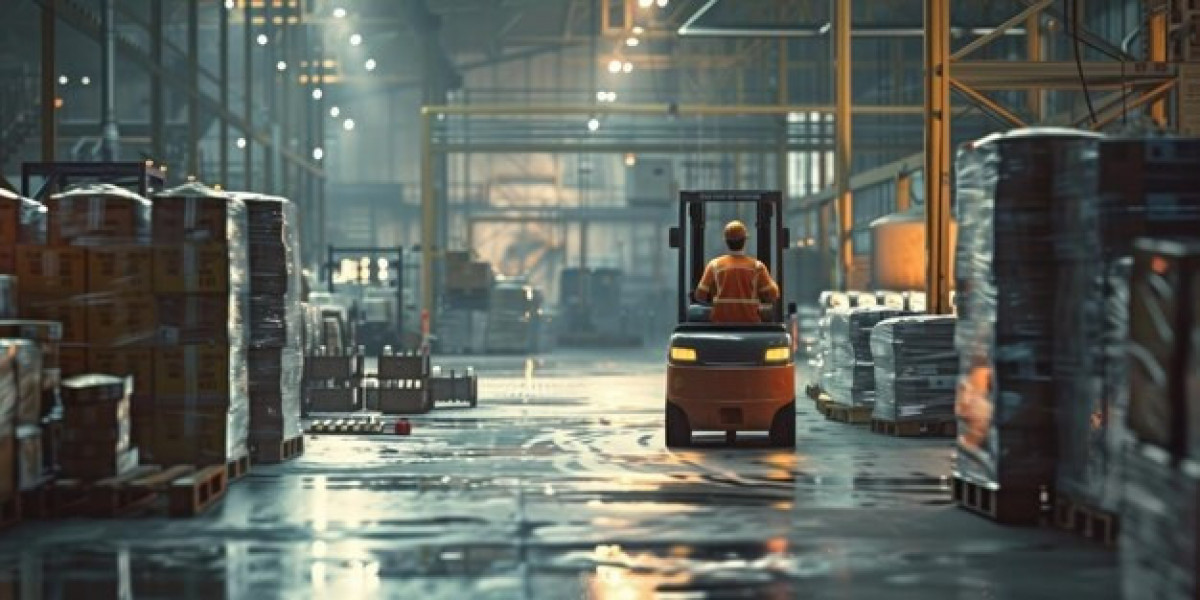

In the fast-moving world of logistics, warehouse operations have become crucial in defining supply chain efficiency. Among all operations concerned, order picking, or the retrieval of items to fulfil the orders of a customer, has undergone a dramatic change with the integration of technology. And as businesses scale up, the demand for faster and error-free deliveries raises debates over whether to use traditional methods of manual picking or invest in fully automated picking systems integrated with a modern WMS.
Differences between Manual and Automated Picking
For most warehouses, a manual picking system is the usual approach, especially when it comes to small or medium-scale operations. Goods get located, picked, and packed by workers using either handheld scanners or paper lists. On one hand, while manual picking allows for flexibility and offers lower initial investment, it is heavily reliant on human effort. This often leads to slower fulfilment rates, higher error margins, and inefficiencies during peak demand seasons.
While manual systems are slow and require a person for almost every phase, the automated picking systems make use of robotics, conveyor belts, sensors, and ASRS. These, integrated into a Warehouse Management System, can also instruct robotic arms to precisely pick and transport goods using automated guided vehicles. This system reduces human involvement in repetitive tasks; thus, it increases productivity with accuracy and consistency.
Automation also enhances visibility by tracing every movement in real time for better stock management at minimum risk of misplaced inventory, which a manual system usually fails to provide.
Benefits of Automated Picking Systems
Advantages of automation are not confined to speed only. Automated picking systems make a big difference in warehouse performance with:
Higher Accuracy: Automation almost completely removes all forms of picking errors, therefore guaranteeing correct orders for improved customer satisfaction.
Operational Efficiency: The robotic systems will be able to work 24/7-executing more orders without fatigue or error.
Long-term cost savings: the setups are more expensive, but automation reduces labour and other error-related costs in the long run.
Waste reduction: The use of automation often enables higher storage density and better use of height.
Payment and scalability: Automation easily scales through software and hardware upgrades to meet increased order volumes.
A well-designed warehouse management system works in cohesion with automation to harmonise the performance of machinery, inventory data, and workflows. Assembled together, they form a coordinated ecosystem that can handle challenging logistics with little manpower.
Examples of Successful Picking System Implementation
Several warehouses around the world have automated their operations. Major e-commerce companies have already adapted to robotic picking arms, shuttle systems, and artificial intelligence-powered WMS platforms capable of managing millions of orders every day.
In India too, such technologies have been adopted by some forward-looking firms. Companies like Addverb have developed intelligent automation solutions using robotics in conjunction with digital warehouse management tools. Their systems illustrate how local industries are leveraging automation to enhance precision and increase throughput, keeping pace with global logistics standards.
Such implementations show that integration can bring about an impact on very tangible levels: shortening of the turnaround time, increasing worker safety, and enabling data-driven decision-making in real time.
Comparison of Accuracy and Efficiency
The metrics of manual versus automated picking tell a very clear tale.
Accuracy: Manual item picking, even by trained personnel, has an average of about 95–97% accuracy. On the other hand, automated systems deploying sensors and WMS achieve an accuracy rate as high as 99.9%, ensuring fewer errors are experienced and subsequently reduced numbers of returns, adding to the trust of customers.
Efficiency: Manual systems are based on the actual walking time of a human being and also need human involvement to run the process, which is slow and labour-intensive. Automation dramatically reduces walking time by presenting goods to the picker or eliminating human movement altogether. Often, the result seen is a dramatic increase in order throughput, sometimes even doubling or tripling picking speeds.
Labour Productivity: While automation performs the mundane tasks, human workers can concentrate on quality control, maintenance, or exception handling, thus balancing the workflow and generally improving morale within the warehouse.
Cost Implications: Though entry costs are low for manual systems, inefficiency in the long run and dependence on labour make them more costly. Automatic systems are capital-intensive but have steady savings through error reduction, improvement in inventory turnover, and resource utilisation.
Automated Warehouse Picking: What's in Store?
The future of warehouse operations is surely towards intelligent automation. Advancing artificial intelligence, machine learning, and the Internet of Things set standards for the next generation of automated picking systems.
Predictive analytics for warehouse management systems would be much more prevalent to enable warehouses to forecast demands and pre-position inventories with ease. Besides, collaborative robots or co-bots can be deployed to work alongside human staff and enhance both safety and productivity further. Additionally, 5G and digital twins will further enable real-time monitoring and control of the entire warehouse ecosystem, effortlessly orchestrating efforts between machines and management systems. Energy-efficient robots and eco-friendly warehouse design underline the future of logistics automation, where sustainability is at the top of every company's agenda.
Conclusion
The debate between manual and automated picking systems boils down to scalability, accuracy, and long-term operational goals. Manual systems may serve small-scale operations well, but have been increasingly incapable of keeping up with today's demands for fulfillment. Automated picking systems, driven by an intelligent warehouse management system, paint a clear roadmap to speed, precision, and robustness. As technologies continue to evolve, the question for most businesses won't be whether they automate but rather how soon.
Those companies now adopting intelligent automation, such as from innovators like Addverb, are already setting new benchmarks in efficiency and reliability across the world's supply chains. Investing strategically in automation, warehouses are not just upgrading to new equipment; they're future-proofing their operations for the demands of tomorrow's logistics landscape.