
When designing a safe, durable, and aesthetically pleasing outdoor area — whether it’s a children’s playground, daycare, school yard, or community park — the surfacing you choose matters. That’s why Poured in place rubber has become one of the most trusted solutions in recent years. In this blog, we explore what poured-in-place rubber is, why it stands out, and how it can transform any outdoor space into a safer, more inviting environment.
What Is Poured-In-Place Rubber?
Poured-in-place rubber (also known as pour in place rubber or wet-pour) is a type of seamless, impact-absorbing surface created by combining rubber granules with a polyurethane binder and pouring the mixture directly on-site. Once spread and leveled, it cures into a continuous, smooth surface that conforms to the area’s shape — no seams, no joints, no trip hazards. This method contrasts with rubber tiles or loose surfacing, offering a cleaner, more polished finish.
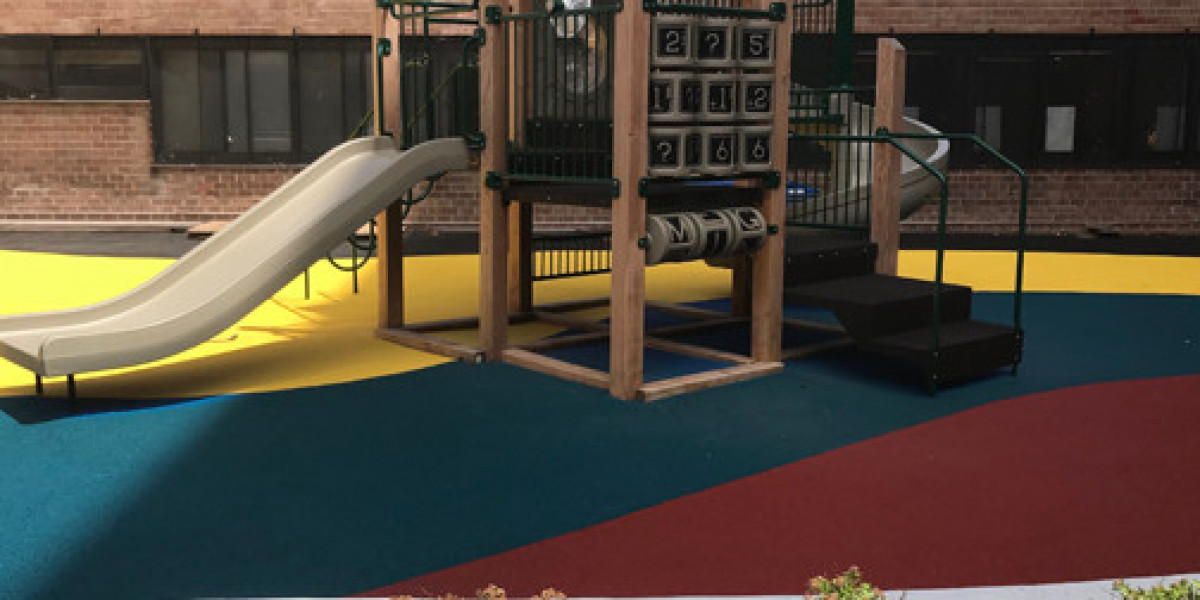
Because of its seamless nature and shock-absorbing qualities, poured-in-place rubber surfacing is especially popular in playgrounds, daycare centers, schools, sports facilities, and even residential backyards. It’s also versatile in design: colored rubber granules and artistic patterns can be used to create logos, games, or playful pathways — giving both function and flair.
Why Choose Rubber Surfacing Over Traditional Materials?
Durability and Longevity
Traditional playground surfaces — woodchips, sand, or gravel — need regular maintenance. They scatter, compact, or erode, and quickly lose their cushioning effect. In contrast, rubber surfacing is highly durable. Once installed, it withstands heavy foot traffic, weathering, and regular use, often lasting 10–15 years or more with minimal upkeep. Because the surface is seamless, there’s no shifting or displacement, meaning no uneven patches or holes.
Safety First — Impact Absorption and Slip Resistance
One of the strongest advantages of pour in place rubber surfacing is its shock-absorbing quality. The rubber’s elasticity cushions falls — a critical feature in playgrounds or schoolyards where kids run, jump, and climb. It reduces the risk of serious injuries from trips and slips. The finished surface is also slip-resistant, even when wet, offering safe play conditions after rain. For parents, school administrators, or community center managers, that peace of mind is priceless.
Accessibility and Inclusiveness
Because poured rubber surfaces are smooth and even, they provide excellent accessibility for wheelchairs, walkers, bicycles, or strollers. Unlike woodchips or sand, which can be difficult to navigate for people with mobility challenges, rubber surfacing is inclusive and user-friendly. That makes it a smart choice for inclusive playgrounds, public parks, or community spaces that aim to accommodate everyone.
Low Maintenance and Weather-Resistant
Rubber surfacing requires very little maintenance — no raking, replacing mulch, or refilling sand. A simple periodic clean (sweeping or rinsing) keeps the surface looking fresh. Plus, because the rubber is weather-resistant, it handles rain, sun, heat, and cold without cracking or degrading. It doesn’t rot like wood mulch, nor does it blow away like sand. Over time, the cost savings on maintenance make poured rubber a smart long-term investment.
Installation and Design Flexibility
On-Site Installation for Custom Shapes (H3)
With pour in place rubber surfacing, installation is done directly on-site. This allows the surfacing to follow any shape — curved playground contours, irregular garden paths, or custom sports court boundaries. The flexibility ensures that you can maximize available space and create unique designs tailored to the environment.
Custom Colors, Patterns, and Branding (H3)
Another benefit is the aesthetic freedom. Colored rubber granules let you create vibrant play areas, themed zones, or decorative pathways. Schools might incorporate their colors or logos; parks might design step-pathways, hopscotch grids, or playful murals. This means rubber surfacing isn’t just functional — it also contributes to the overall look and feel of the space, making it more engaging and inviting.
Use Cases: Where Poured-In-Place Rubber Shines
Playgrounds and schools: For safe play areas with impact absorption and easy mobility.
Daycare centers and preschools: Soft, slip-resistant surfaces ideal for very young children.
Parks and public spaces: Durable, low-maintenance surfacing that remains attractive for years.
Residential backyards: For safe play zones, garden paths, or cozy patios.
Sports areas and fitness trails: Its shock-absorption and smoothness make it suitable for running paths or outdoor gyms.
Things to Consider Before Installation
While pour in place rubber surfacing offers many advantages, there are a few things to keep in mind:
Initial Cost: Compared to sand or wood mulch, the upfront installation cost is higher. However, the long-term durability and minimal maintenance often make it more cost-effective over time.
Professional Installation Required: Because the process involves mixing rubber granules with binder and applying them correctly, professional installation ensures safety standards and optimal performance.
Drainage Planning: Good drainage is essential. Since poured rubber surfaces are impermeable, proper grading or drainage infrastructure must be planned to prevent water pooling.
Conclusion
If you’re looking to create a safe, attractive, and long-lasting outdoor space — be it a playground, school yard, park, or backyard — poured-in-place rubber surfacing is hard to beat. Its seamless finish, shock absorption, slip resistance, low maintenance, and design flexibility make it a smart investment for any environment demanding safety, durability, and aesthetics.
By choosing pour in place rubber surfacing, you’re not just installing a surface — you’re crafting a space that welcomes play, movement, and happiness for years. And with the right planning and professional installation, you’ll get a surface that remains reliable, safe, and beautiful season after season.