
In highly competitive technology markets where product life-cycles shrink and innovation is key, original equipment manufacturers (OEMs) must move from concept to launch faster than ever. They face challenges like frequent design changes, high-mix/low-volume requirements, variant builds, component obsolescence and supply-chain complexity. To succeed, they need a manufacturing partner that can align design, prototype, tooling and production within tight timelines, and support the full product life without compromising quality or cost. Organisations such as Cyient DLM Private Limited demonstrate how integrated manufacturing ecosystems help technology-driven companies accelerate new product introduction (NPI) while maintaining reliability and readiness for the long term.
The NPI Imperative for Technology-Driven Companies
Technology-driven companies demand agility. Whether launching advanced electronics systems for aerospace, defence, medical or industrial markets, the pressure to shorten time-to-market is intense. New product introduction involves multiple phases concept development, prototype iteration, pilot builds, qualification, tooling and production ramp-up. Many companies struggle when board fabrication, mechanical machining, harness assembly, system integration and testing are handled by different vendors, leading to delays, hand-off issues and increased risk. The need for early design for manufacture, flexible production lines and responsive tooling is growing. Furthermore, sustaining products after launch with upgrades, variant support and localised supply chains adds complexity making a unified manufacturing partner essential.
Enabling electronics manufacturing solutions from Concept to Production
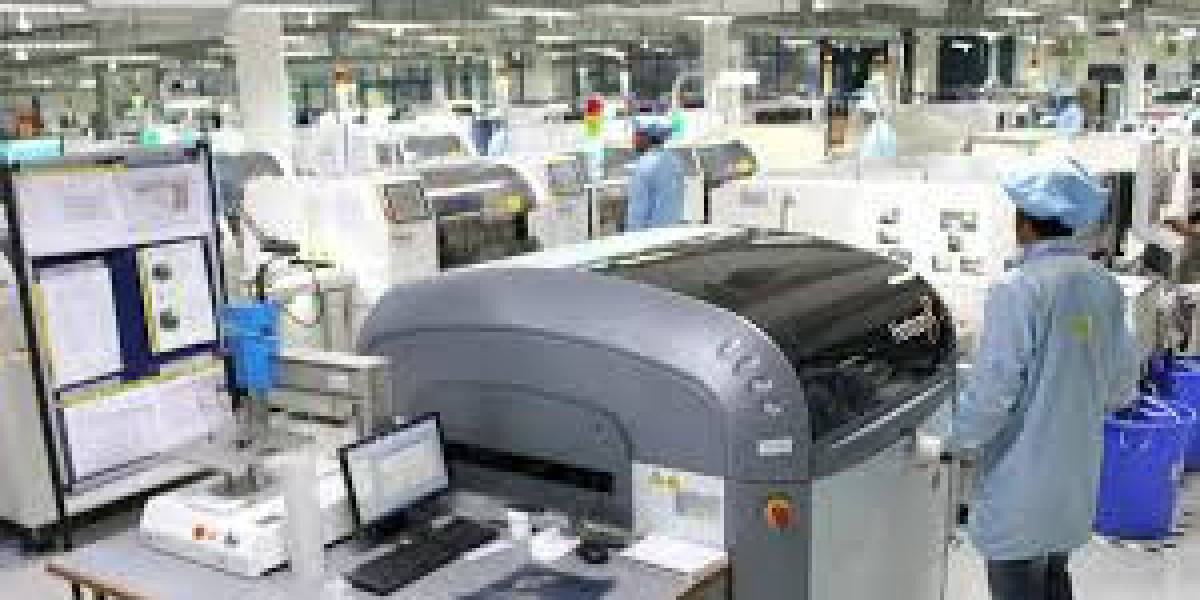
Technology-driven OEMs benefit when their manufacturing partner offers a full portfolio of services that cover board assembly, cable/harness fabrication, box-build, mechanical machining, additive tooling, test and sustainment. At the heart of this offering is electronics manufacturing solutions that include high-mix, low- to medium-volume PCB assembly, mixed‐technology soldering, under-fill BGAs, inline cleaning, conformal coating, potting, RF/microwave modules, cable/wire harness production and system integration. Complementing this are mechanical manufacturing, precision machining, metrology, heat treatment and additive manufacturing for tooling. By integrating all these services into one workflow, OEMs reduce vendor coordination, shorten prototype-to-production paths, handle variants smoothly and sustain products in service for longer.
Design-Led Manufacturing Accelerates NPI
A key enabler of fast NPI cycles is design-led manufacturing where manufacturability, testability and serviceability are embedded at the design stage. Early collaboration between engineering and manufacturing ensures that tooling, assembly sequences, test fixturing and supply-chain readiness are addressed before production begins. This reduces redesign, accelerates pilot build, improves first-pass yield and supports variant introduction and long-life service. The ability to iterate rapidly using additive tooling or early prototypes and then ramp into production with minimal changeovers is vital for OEMs launching new technologies.
Prototype to Pilot to Production: A Seamless Path
Rapid NPI demands a smooth transition from prototype to pilot runs to full production. Modern manufacturing ecosystems support this by offering quick tooling, flexible assembly lines, modular test setups and integrated supply-chain management. OEMs can validate fit/ form/function early, iterate design variations swiftly and then ramp into production with confidence. This approach reduces time-to-market, lowers risk and improves predictability. Further, production support for low-volume, high-complexity builds ensures that new products often with multiple variants can launch without compromising cost or quality.
Variant Management and Scalability
Technology-driven markets often include variant builds, custom configurations, upgrades and service kits. An NPI-capable manufacturing partner must support modular tooling, flexible production cells, variant-specific test setups and spare-parts readiness. This ensures that upgrades and derivative models can be launched quickly without disrupting core production. A unified manufacturing ecosystem makes variant support efficient, predictable and cost-effective enabling OEMs to respond rapidly to market demands and maintain competitiveness.
Supply-Chain Agility and Component Lifecycle Management
In NPI environments, component lead-times, obsolescence, sourcing risks and localisation pressures can stall launches. Manufacturing partners that integrate supply-chain engineering into their workflow help mitigate these risks. By monitoring component life-cycles, identifying alternatives, localising sourcing, value-engineering parts and aligning supply-chain readiness with design and production, OEMs can avoid last-minute surprises. This supply-chain agility is especially important for new product roll-outs where timelines are critical.
Quality, Test and Regulatory Readiness
Rapid NPI must not sacrifice quality. Technology-driven companies often operate in regulated environments requiring certification, traceability and quality control. Manufacturing ecosystems that combine advanced inspection and test capabilities such as automated optical inspection (AOI), 3D X-ray inspection (AXI), flying probe test (FPT), in-circuit test (ICT), environmental stress screening (ESS), vibration testing and functional system-level validation provide OEMs with confidence. Mechanical production must align with precision machining, metrology and non-destructive testing. A unified workflow ensures every unit built is test-ready, compliant and capable of meeting rigorous standards without delaying launch.
Lifecycle Support Post Launch
Launching the product is only the beginning. Sustaining new products requires aftermarket support, service-kit production, upgrades, spare-part readiness and variant roll-out. Manufacturing ecosystems capable of providing sustained production, refurbishment services and version management enable OEMs to keep new products relevant, maintain reliability and control cost over their life-cycle. This ongoing support ensures that innovations remain in the field longer and deliver value for customers.
Strategic Benefits for OEMs
By partnering with manufacturing ecosystems optimized for rapid NPI, OEMs gain strategic benefits:
Shorter time-to-market thanks to integrated design, manufacturing and test workflows
Lower opportunity cost and risk through agile tooling, variant readiness and supply-chain alignment
Improved first-pass yield and quality through embedded testability and manufacturability
Enhanced variant flexibility and upgrade pathways tied to long-life support
Reduced total cost of ownership via streamlined production and sustainment
Higher competitive advantage as they focus on innovation while the manufacturing partner handles execution
Conclusion
In technology-driven industries, the speed and reliability of new product introduction are critical differentiators. OEMs that manage to launch products faster, maintain high quality, support variants and sustain platforms over time outperform. Achieving this requires a manufacturing partner that provides concept-to-production capability, design-led workflows, integrated electronics and mechanical manufacturing, test infrastructure and supply-chain engineering. For those seeking to accelerate their NPI cycles and deliver next-generation technology effectively, aligning with such a partner provides they need to compete and win.