
Road freight China to Pakistan has become a preferred logistics method for traders seeking faster delivery than sea freight and lower costs than air freight. Thanks to the development of the Karakoram Highway (KKH) and the China–Pakistan Economic Corridor (CPEC), road cargo is now efficient, reliable, and suitable for both small and large shipments.
To help traders understand how the process works, here is a complete step-by-step guide to the road freight journey from China to Pakistan.
1. Initial Inquiry and Quotation
The process begins when a trader contacts a road freight forwarder operating in China and Pakistan. You provide details such as:
Type of goods
Quantity and weight
Pickup location in China
Delivery city in Pakistan
Whether the shipment is FTL (Full Truck Load) or LTL (Less Than Truckload)
Any special requirements (fragile, temperature control, high-value, etc.)
The logistics company then shares a quotation, including trucking fees, border handling, customs clearance, and final delivery charges.
2. Goods Pickup and Transport to Chinese Warehouse
Once the quote is approved, the forwarder arranges pickup from:
Supplier’s factory
Freight warehouse
Wholesale market (Yiwu, Guangzhou, Shenzhen, etc.)
The goods are transported to a central consolidation warehouse, usually located in Kashgar or Urumqi for China–Pakistan road shipments.
If you have multiple suppliers, the forwarder will consolidate everything into one shipment to reduce costs.
3. Cargo Inspection and Quality Check (Optional)
Many freight companies offer optional services such as:
Item counting
Visual quality checks
Packaging inspection
Photographing goods
Verifying supplier accuracy
These steps help ensure the cargo is correct and safe before the journey begins—especially useful for e-commerce sellers and small businesses.
4. Packaging, Labeling, and Palletizing
Strong packaging is essential for the long and bumpy road journey. At the warehouse, the freight company may:
Reinforce cartons
Add protective wrapping
Place fragile labels
Palletize large loads
Use shrink-wrap to secure boxes
Seal cargo with safety tape
Proper packaging reduces the chances of damage during transport.
5. Consolidation and Loading Onto Trucks
If your shipment is LTL, it will be combined with other goods to optimize space and reduce costs.
If it's FTL, the entire truck is dedicated to your cargo.
Once ready, the warehouse team loads the shipment onto a truck heading toward the Khunjerab Pass, the primary border crossing between China and Pakistan.
6. Chinese Customs Clearance
Before entering Pakistan, the cargo must clear Chinese customs. This step includes:
Verifying documents
Scanning and inspection
Checking HS codes
Export filing
Verifying that cargo matches the invoice
Reliable forwarders handle this process quickly to avoid delays.
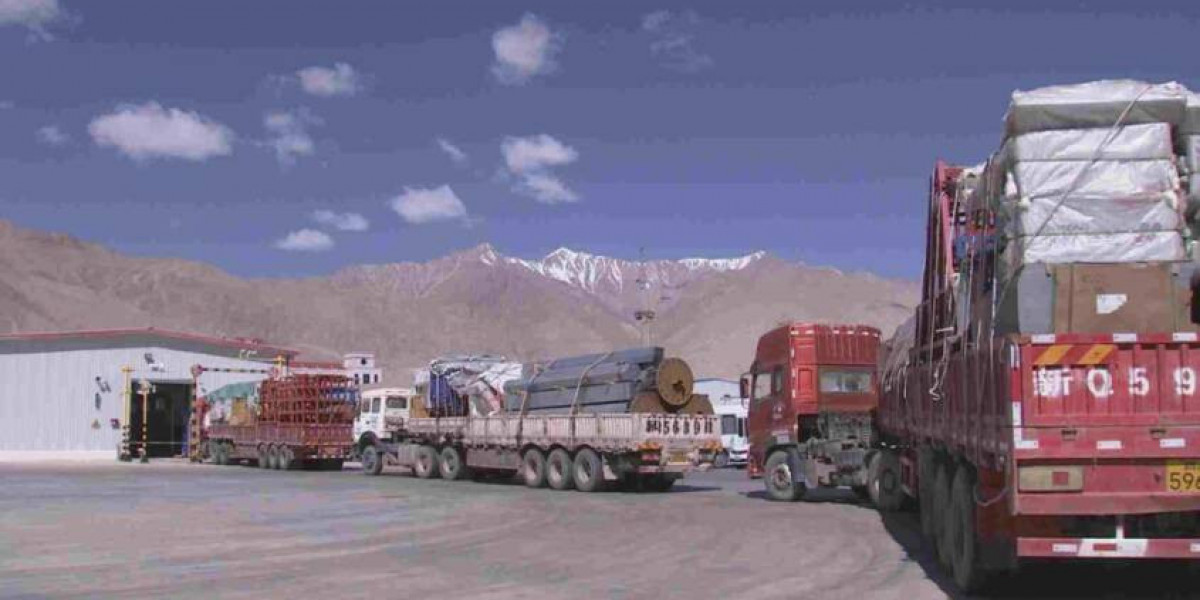
7. Cross-Border Transport via the Karakoram Highway
Once cleared, the truck begins its journey through the scenic—and challenging—Karakoram Highway.
Key route points include:
Kashgar / Urumqi
Tashkurgan
Khunjerab Pass (China–Pakistan border)
Sost Dry Port, Gilgit-Baltistan
Travel times depend on weather and road conditions. Normally, the trucking transit takes 4–8 days depending on the origin city.
8. Clearance at Sost Dry Port (Pakistan Side)
After crossing into Pakistan, the cargo reaches Sost Dry Port, where Pakistani customs clearance takes place.
Customs procedures include:
Verification of commercial invoice
GD form submission
Duty and tax assessment
Physical examination if required
Release order issuance
A skilled forwarder helps ensure smooth and error-free clearance.
9. Transloading to Pakistani Trucks (If Required)
In many cases, the Chinese truck is not allowed to continue deep into Pakistan.
Therefore, goods are transloaded to Pakistani domestic trucks.
Exceptions exist under certain agreements where through-trucking is permitted, but these are limited and seasonal.
10. Delivery to Final Destination in Pakistan
Once the shipment is loaded onto Pakistani transport, it is dispatched to cities such as:
Islamabad
Lahore
Karachi
Faisalabad
Multan
Sialkot
Peshawar
Delivery times vary between 2–5 days depending on the destination.
Most forwarders also provide:
Real-time GPS tracking
Regular updates via WhatsApp or email
Delivery proofs (POD)
Customer support for any issues
11. Final Handover and Documentation Completion
When the cargo reaches the buyer, the forwarder completes the final steps:
Delivery confirmation
Collection of signatures
Sharing of customs clearance documents
Issuing of final invoice
Completing insurance claims if damage is reported
With that, the entire road freight process is successfully completed
Why Traders Prefer Road Freight Between China and Pakistan
Road freight continues to gain popularity because it offers:
Faster delivery than sea freight
Cheaper rates than air freight
Door-to-door convenience
Lower handling and reduced damage
Ideal transit times for e-commerce and small shipments
Flexibility and easy consolidation
It acts as a perfect middle option for businesses needing a balance between cost and speed.
Conclusion
The road freight process from China to Pakistan is smooth, structured, and increasingly reliable thanks to CPEC and improved logistics networks. Understanding the complete step-by-step workflow—from pickup and packaging to customs clearance and final delivery—helps traders plan shipments more effectively and avoid delays or mistakes.
By choosing a professional freight forwarder and following proper documentation and packaging practices, businesses can benefit from fast, safe, and cost-efficient road cargo solutions.