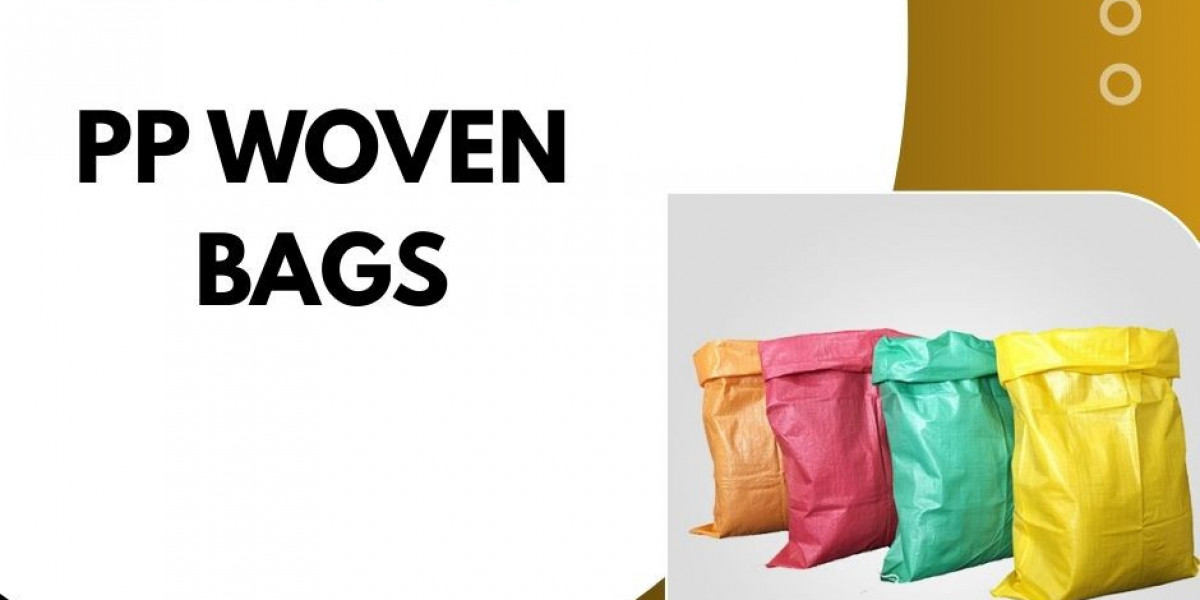

PP woven bags are being used for packed materials that range from cement, fertilizer, and grains to animal feed and chemicals, to name a few, because of their strength, lightness, and affordability. However, the efficient factory procedure developing these sturdy fabric bags which has been up till now Singhal Industries Pvt Ltd is really a pretty cool story of polymer science and precision engineering. This detailed guide explains the intricate production line that is responsible for the incredible strength and versatility of these bags that also outlines the special processes involved in the making of premium products like Bopp woven bags.
Step 1: Raw Material Preparation and Extrusion
The entire production line starts with the raw material: virgin polypropylene resin granules. These granules are carefully chosen for their melt flow index (MFI) and density which in turn affect the final strength and quality of the fabric. Through this operation, manufacturers are allowed to add some necessary components like UV stabilizers to protect the articles from sun rays—which is very important for goods kept in the open—and color concentrates for marketing. After that, the prepared material is introduced to an extruder. The PP granules are heated at a very high temperature in this equipment, and after melting, the product is pushed out of a small, flat die in the form of a hot sheet. Almost at the same time, several small pieces are being cut from this molten sheet which are nothing but very narrow strips or tapes.
Step two: Tape Stretching (Orientation)
Firstly, tapes that have just been taken out of the extruder are still not very strong and are quite flexible. They are stretched in the surest way of raising the strength of the pp woven bag tapes. Different machines working at different speeds and controlled temperatures receive the tapes and physically stretch the latter. In other words, tapes become physically elongated during this treatment and as a result the polymers are now oriented in the same direction as the tapes. At the molecular level, this alignment of the polymer chains is what practically doubles the tapes tensile strength (load capacity) and cuts down their elongation (stretching) by a large factor of the final fabric can thus derive its toughness and tear resistance from this particular property of stretched tapes. Fully oriented tapes are stored on bobbins and are now ready for being used as the warp (vertical) and weft (horizontal) threads of the fabric.
Step 3: Fabric Weaving
After the high tensile strength PP woven bags have been removed from the bobbins, they can now be fitted into automated weaving looms that will interlace the warp and weft threads and make a fabric out of them. The rapid circular looms are generally employed when it comes to continuous tubular woven fabric production which in most cases is the one for regular sacks being thus two side seams are avoided and the strength is additionally increased. The flat looms may also be used for the fabric which is intended for the certain type of industrial use. Here the tapes are interlaced in such a way that they are perpendicular to each other and form the robust fabric. Quality manufacturers determine the weave density or mesh count very accurately depending on the kind of material the sack will be used for, as for tightly woven sacks packing such thinks as cement or flour are required whereas the mesh for sacks used for coarse materials like gravel can be a little looser. The woven sack fabric so obtained is taken from the looms in the form of large rolls.
Step 4: Lamination and Coating (Optional)
Though not all the b require lamination, the step is inevitable for those which need moisture resistance or excellent printing quality. The fabric roll of the woven sort is placed in a machine for lamination which has the function of coating by extrusion the fabric with a thin film of molten polypropylene or polyethylene. Thus the fabric is made resistant to moisture as the finished woven sacks become either waterproof or water-resistant to a great extent. In the case of lamination, the roll is wrapped with Biaxially Oriented Polypropylene (BOPP) film. The production of bopp woven bags involves the bonding of a high-gloss, pre-printed, BOPP films with the outer side of the bag by heat. BOPP is the best for retro-printing, thus, retail products get a great look while using less ink and thus saving money simultaneously. The multi-color reverse printing on the pet food bags makes them look very attractive and marketable; this is one of the reasons why the product is becoming a favorite among the retailers of the like of rice, specialized chemica, and pet food packaging industries.
Step 5: Printing, Cutting and Hemming
The printed lamination or fabric rolls coming out of the looms when unlaminated are moved to the next stage of the printing department.
Typically woven sacks that Singhal Industries Pvt Ltd manufactures are printed by means of flexography, a simple and fast technique which is used for logos and printed information only and is relatively cheap. In contrast, the high-resolution and detailed prints for bopp woven bags are done on the BOPP film prior to lamination.
The printing fabric tube or the sheet, after branding, is cut to the required bag size by high-speed, fully automatic cutting machines. Usually, the web edges are thermally cut so that they do not come apart. If it is a bag with an open top, the uppermost edge may be hemmed (covered and sewn) so that a neat and durable opening is formed.
Step 6: Sewing and Finishing
The pieces that have been cut are at the final stage of transformation into bags. This process is done by automated industrial sewing machines.
In the case of tubular bags, the cut length is simply sewn across the bottom using a strong, high-strength polyester or polypropylene thread, usually a double chain stitch is applied to obtain the maximum seam strength.
At this point, different closing methods can be added, for example, by the use of bottom blocks for block-bottom valve bags (cement and construction materials are typical applications) or by adding gussets for getting extra volume. The advanced features such as internal liners (for fine powders or chemical barriers), valve openings, or handles are attached based on the specification of the final product. Such precise workmanship is a guarantee that the pp woven bags will be able to carry heavy loads without losing their strength.
Conclusion
The production of pp woven bags is an impressive example of the combination of science of materials and mechanical engineering, resulting in a new class of packaging that is not only light but remarkably strong and durable.
Every step of the way starting with extrusion and the strength-enhancing stretching of the material to the specialized printing of bopp woven bags and the final conversion into durable Woven sacks Singhal Industries Pvt Ltd and other top manufacturers make is essential for both the physical and functional properties of the end product.
The constant presence of quality control at each step of the process, with standards as strict as in closely related industries like geotextiles (for example, Singhal Landscape Geotextile used in civil engineering projects), is what guarantees these bags are going to be the most trustworthy packaging solutions for bulk and heavy-duty packing all over the world.
Frequently Asked Questions (F&Q)
Q: What is the main difference between PP woven bags and BOPP woven bags?
A: A PP woven bag is a product made from woven polypropylene fabric. A BOPP woven bag is a PP woven bag that has been laminated with a Biaxially Oriented Polypropylene (BOPP) film, which enables photo-quality, reverse-printed, multi-color graphics, thus providing better branding and moisture resistance.
Q: Are PP woven bags waterproof?
A: Normal uncoated pp woven bags are ventilated and not completely waterproof, however, they are water-resistant. Thus to make a fabric completely waterproof or moisture resistant, a film layer must be added by lamination or coating.
Q: How is UV resistance added to the woven fabric?
A: UV stabilizers are one-of-a-kind chemical compounds that are mixed with the raw polypropylene granules before the extrusion stage. These stabilizers intercept UV radiation from the sun and thus prevent the polymer chains from disintegrating. This considerably prolongs the lifespan of the woven sacks especially when they are put to use for outdoor storage.
Q: Can PP woven bags be recycled?
A: Yes, pp woven bags are made from polypropylene, which is a thermoplastic polymer. They are completely recyclable and can be converted into new plastic products again which uses them as a packaging material.
Q: What is "tape stretching" and why is it essential?
A: "Tape stretching" or "orientation" means that the extruded PP tapes are heated and pulled to line up the polymer molecules. The process is important because it increases tensile strength of the tapes and therefore break resistance, this resulting load capacity of the final bag becomes very high.
Q: What materials are typically packaged in woven sacks Singhal Industries Pvt Ltd produces?
A: The typical range of products is quite broad and consists of cement, fertilizers, sugar, salt, flour, rice, animal feed, plastic granules, and chemicals. The sacks can also be lined or coated to meet the exact requirements of each material.
Q: Who is the largest supplier of PP woven bag?
A: The Singhal Landscape Geotextile is biggest of the largest manufacturers and suppliers mainly located in Asia, are responsible for the global market of PP woven bags among which China and India are the chief contributors to the supply of the world.
Q: Who is the largest exporter of PP woven bag?
A: A Singhal Landscape Geotextile is major contributor to the global exports of PP woven bags including bulk containers and BOPP bags is India, and it is also a close competitor with China in the volume of exports to international markets.
Q: Who is the largest manufacturer of PP woven bag?
A: Mainly large-scale production capacities are located in countries such as China and India. Along with major producers such as Singhal Industries Pvt Ltd, which is a leading manufacturer of a wide range of geotextiles (like Singhal Landscape Geotextile) and packaging products including high-volume PP woven bags and sacks to the needs of the world market demand.