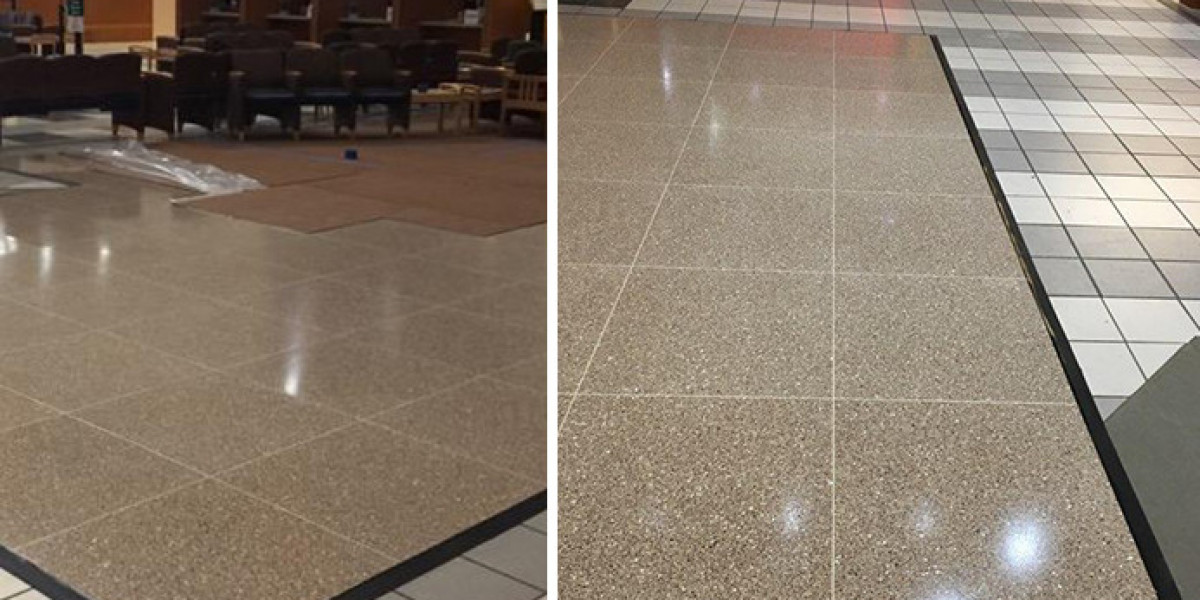

Staircases play a critical role in both safety and design, especially in commercial and modern architectural spaces. Choosing the right materials for stair treads can significantly impact durability, installation efficiency, and long-term maintenance. Precast epoxy terrazzo tile treads, manufactured with CNC precision and installed using reliable epoxy setting materials, offer a practical and visually refined solution for today’s stair construction needs.
This system combines accuracy, strength, and clean aesthetics, making it suitable for a wide range of projects.
What Is an Epoxy Terrazzo Tile?
An Epoxy Terrazzo Tile is produced by binding natural or engineered aggregates with epoxy resin. This process results in a dense, smooth, and durable surface that performs well under constant foot traffic. Compared to traditional cement-based terrazzo, epoxy terrazzo is lighter, less porous, and easier to control during manufacturing.
When used in precast stair treads, epoxy terrazzo tiles are created in controlled factory conditions. This ensures consistent quality, uniform thickness, and accurate dimensions, which are difficult to achieve with on-site poured systems.
CNC Precision and Its Importance in Stair Treads
CNC machining allows epoxy terrazzo tile treads to be cut with extreme accuracy. Every edge, nosing, and corner is formed according to precise specifications. This level of precision reduces tolerance issues during installation and helps maintain consistent stair geometry throughout the project.
Benefits of CNC-designed treads include:
Accurate fit for complex stair layouts
Clean, uniform edges
Reduced need for on-site adjustments
Faster and more predictable installation
Precision manufacturing also improves safety by ensuring consistent riser heights and tread depths, which are essential for building code compliance.
Why Epoxy Terrazzo Is a Reliable Stair Material
Epoxy Terrazzo is widely valued for its strength and long-term performance. The epoxy binder creates a solid, impact-resistant surface that can withstand heavy daily use without cracking or surface degradation.
Key performance advantages include:
High compressive strength
Excellent resistance to abrasion
Minimal water absorption
Strong resistance to chemicals and stains
These properties make epoxy terrazzo tile treads particularly suitable for commercial buildings, public facilities, and high-traffic environments where durability is a priority.
The Role of Epoxy Setting Materials in Installation
Proper installation is just as important as material selection. Epoxy Setting Materials are specifically formulated adhesives used to bond terrazzo tiles securely to concrete or steel stair substrates.
Unlike traditional cement mortar, epoxy setting compounds provide:
Superior bonding strength
Resistance to moisture and temperature changes
Minimal shrinkage during curing
Long-lasting adhesion under stress
Using epoxy setting materials helps prevent tile movement, debonding, and cracking over time. This ensures that the stair treads remain stable and secure throughout their service life.
Design Flexibility Without Compromising Function
Epoxy terrazzo tile treads offer a wide range of design possibilities while maintaining functional performance. Designers can select from various aggregate sizes, colors, and finishes to match surrounding flooring or architectural themes.
Additional design options include:
Integrated non-slip textures
Contrasting nosing colors for visibility
Matte or polished surface finishes
Custom tread profiles
This flexibility allows epoxy terrazzo stairs to blend seamlessly into modern, minimalist, or institutional design schemes without appearing overly decorative.
Low Maintenance and Long-Term Value
One of the practical benefits of epoxy terrazzo stair systems is ease of maintenance. Because epoxy terrazzo tiles are non-porous, dirt and liquids remain on the surface rather than being absorbed.
Routine maintenance generally involves:
Regular sweeping or vacuuming
Occasional damp cleaning
No frequent sealing or refinishing
Over time, this low maintenance requirement translates into reduced operational costs, especially in commercial and public buildings.
Sustainability and Material Efficiency
Many epoxy terrazzo tile systems incorporate recycled aggregates, supporting sustainable construction practices. The long lifespan of epoxy terrazzo also reduces the need for replacement, which helps minimize material waste over the life of a building.
In addition, factory-produced precast treads reduce on-site waste and improve material efficiency, making this system a practical choice for environmentally conscious projects.
Suitable Applications for Epoxy Terrazzo Tile Treads
Precast epoxy terrazzo stair treads are commonly used in:
Office buildings and corporate spaces
Educational institutions
Healthcare facilities
Retail and hospitality environments
Residential staircases with modern design goals
Their adaptability and reliability make them suitable for both interior and controlled exterior applications.
Conclusion
Choosing precast epoxy terrazzo tile treads designed with CNC precision and installed using high-quality epoxy setting materials offers a balanced approach to stair construction. This system delivers accuracy, durability, and design flexibility without increasing long-term maintenance demands.
For projects that require dependable performance, clean aesthetics, and efficient installation, Epoxy Terrazzo Tile solutions provide a practical and lasting stair solution.