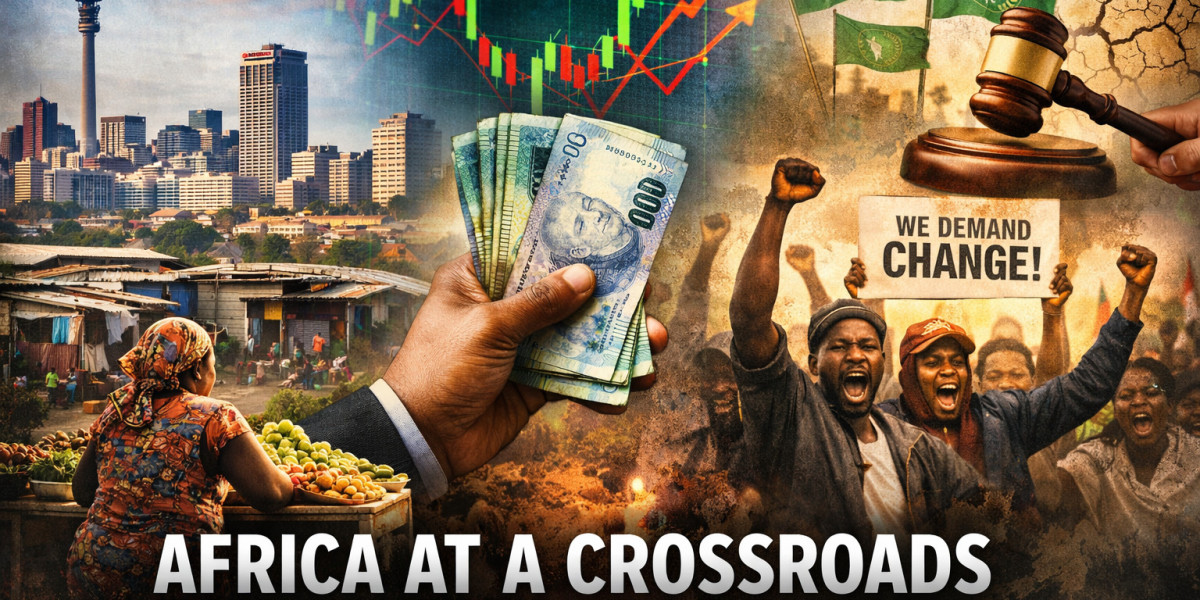

Economic Momentum Meets Global Uncertainty
Africa’s economic outlook in 2026 reflects cautious optimism shaped by external risks. In Southern Africa, improving commodity prices and tighter monetary policies have helped stabilize markets after a volatile period in 2025. The South African rand has shown renewed strength, attracting global investors seeking higher returns amid slowing growth in developed economies.
In East Africa, countries such as Kenya, Tanzania, and Rwanda continue to post steady growth driven by fintech innovation, digital payments, and infrastructure expansion. These economies are increasingly viewed as regional hubs for technology-driven services and logistics. However, economists warn that rising public debt, exposure to global interest rate shifts, and reliance on external financing remain structural vulnerabilities.
Across the continent, governments are under pressure to maintain fiscal discipline while increasing spending on social services, energy security, and climate adaptation. The challenge lies in sustaining growth without deepening inequality or triggering financial instability.
Infrastructure: The Backbone Under Strain
Infrastructure remains one of Africa’s most critical development priorities. Rapid urbanisation has placed enormous strain on water systems, electricity networks, transport corridors, and sanitation services. In South Africa, large-scale upgrades to water and sewage infrastructure have highlighted the economic cost of delayed maintenance and weak project oversight.
Analysts argue that infrastructure breakdowns are no longer isolated service delivery issues but direct threats to economic productivity, tourism, and foreign direct investment. Power shortages, water disruptions, and failing transport systems ripple through supply chains, affecting businesses and households alike.
To address funding gaps, many governments are turning to public-private partnerships, though concerns persist around transparency, governance standards, and long-term affordability. Without strong oversight, infrastructure investment risks reinforcing public distrust rather than restoring confidence.
Governance and the Battle for Public Trust
Governance reform remains a defining theme across Africa in 2026. High-profile anti-corruption investigations, judicial inquiries, and oversight reports have exposed weaknesses in public institutions while also demonstrating a growing appetite for accountability.
Independent media, civil society groups, and digital platforms are playing an increasingly influential role in shaping public debate. Social media has accelerated the speed at which governance failures are exposed, making secrecy more difficult and political consequences more immediate.
Yet progress remains uneven. While some governments are strengthening institutions and improving transparency, others continue to limit media freedom and civic space, raising alarms about democratic backsliding. Political stability, analysts note, will depend less on rhetoric and more on visible improvements in governance outcomes.
Rising Social Pressure and Cost-of-Living Concerns
For ordinary Africans, macroeconomic improvements often feel distant. Rising food prices, transport costs, and housing shortages continue to strain household budgets across both urban and rural areas. Even where inflation has slowed, real incomes remain under pressure.
Youth unemployment stands out as one of the continent’s most urgent challenges. With millions of young people entering the labour market each year, the failure to generate sustainable jobs poses serious risks to social cohesion and long-term stability. Protests, labour disputes, and growing political frustration reflect deeper concerns about economic inclusion.
In response, governments are placing greater emphasis on education reform, skills development, and entrepreneurship support, particularly in digital and technical fields. The success of these initiatives will be critical in determining whether Africa’s demographic advantage becomes a dividend or a liability.
Africa in a Shifting Global Order
Africa’s global significance continues to grow as competition intensifies among major powers for trade access, strategic minerals, and diplomatic influence. From energy transition minerals to agricultural supply chains, the continent is increasingly central to global economic planning.
Regional institutions such as the African Union, ECOWAS, and SADC are seeking stronger coordination on trade, security, and economic integration. The African Continental Free Trade Area (AfCFTA) remains a flagship initiative aimed at unlocking intra-African trade, though implementation challenges and infrastructure gaps persist.
At the same time, climate change is reshaping policy priorities. Droughts, floods, and food insecurity are reinforcing calls for climate-resilient investment and fair access to international climate finance. African leaders argue that sustainable development cannot be separated from climate justice.
Looking Ahead
As 2026 unfolds, Africa’s future will be shaped by decisions made today. The continent has shown remarkable economic resilience, but growth alone will not be enough. Success will depend on stronger institutions, credible governance, and policies that translate economic gains into improved daily life for citizens.
For investors, policymakers, and communities, the coming year represents both risk and opportunity. Whether Africa can turn momentum into inclusive, sustainable progress will define not only national outcomes but the continent’s place in an increasingly uncertain world
Africa Capital Watch