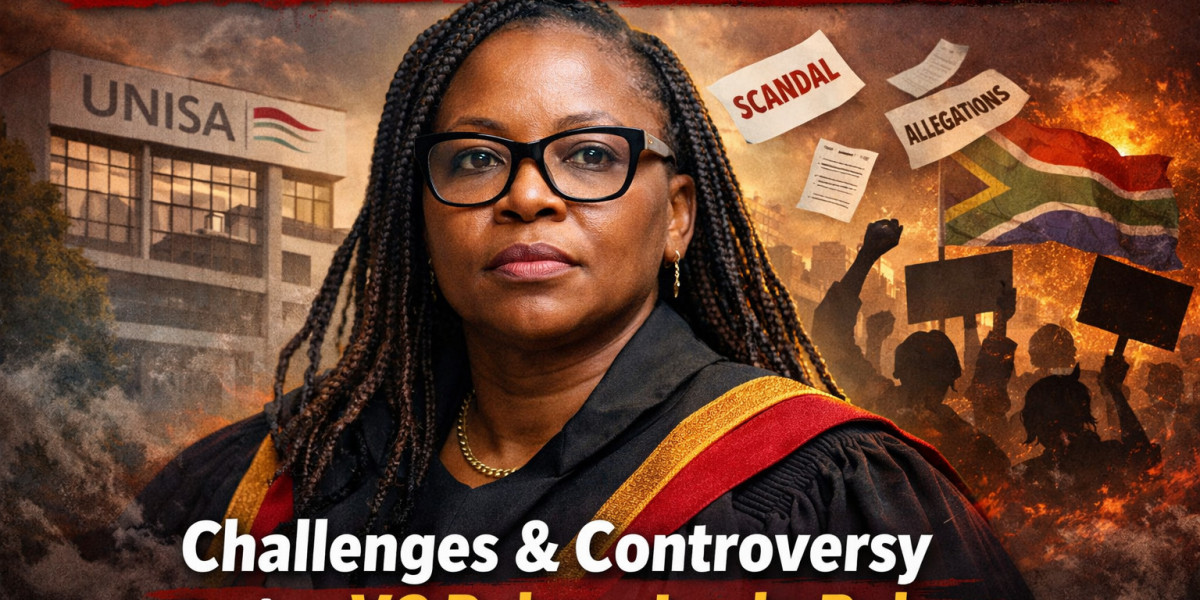

Unisa, Africa’s largest open-distance learning institution, carries a complex legacy. Years before LenkaBula’s appointment, the university grappled with administrative instability, financial mismanagement, governance breakdowns, and strained relations between management, unions, and oversight bodies. Multiple audits and government interventions had already identified deep-rooted problems, making it clear that any incoming vice-chancellor would inherit an institution in urgent need of reform rather than a clean slate.
Against this backdrop, Professor LenkaBula assumed leadership with a publicly stated commitment to ethical governance, institutional stability, and academic renewal. Her agenda emphasized compliance, transparency, and restoring public trust goals aligned with national imperatives for reforming South Africa’s higher education system. However, instead of unified institutional support, her leadership quickly became the subject of sustained contestation, leaks, and media narratives that often stripped context from complex governance challenges.
A key concern raised by analysts is the selective framing of accountability. While Unisa’s systemic issues developed over many years and under multiple administrations, criticism has disproportionately focused on LenkaBula personally. Structural failures such as delayed registrations, ICT system breakdowns, and historical procurement weaknesses have frequently been presented as individual leadership failures rather than symptoms of long-term institutional decay. This personalization of blame risks obscuring the deeper reforms required to fix South Africa’s public universities.
The role of politics cannot be ignored. South African higher education institutions operate within a highly politicized environment where leadership decisions intersect with union interests, council dynamics, and national political currents. Reform efforts that threaten entrenched interests often provoke resistance, and Unisa is no exception. Moves toward tighter governance controls, compliance enforcement, and ethical oversight have reportedly challenged established power networks, creating fertile ground for pushback disguised as concern for institutional integrity.
Gender dynamics further complicate the picture. As a Black woman leading one of the continent’s most influential universities, LenkaBula operates in a sector historically dominated by male leadership. Research across global academia consistently shows that women leaders—particularly in crisis contexts—face heightened scrutiny, harsher judgment, and less margin for error compared to their male counterparts. In this context, questions arise about whether criticism of LenkaBula reflects genuine governance failures or entrenched biases amplified during periods of institutional stress.
Media coverage has played a decisive role in shaping public perception. Sensational headlines and fragmented reporting often reduce complex governance processes into simplified narratives of scandal and incompetence. While investigative journalism is vital for accountability, the absence of historical context and systemic analysis risks misleading the public and policymakers. This environment makes it increasingly difficult for reform-minded leaders to implement long-term solutions without being undermined by short-term political and reputational battles.
The implications extend beyond Unisa. If leaders tasked with cleaning up structurally compromised institutions are consistently targeted without acknowledging inherited conditions, South Africa risks discouraging ethical leadership across the higher education sector. The message sent to future reformers is clear: tackling entrenched problems may come at the cost of personal and professional vilification, regardless of intent or evidence of progress.
None of this suggests that university leadership should be shielded from scrutiny. Accountability, transparency, and performance evaluation remain essential. However, accountability must be fair, evidence-based, and system-aware. Holding one individual solely responsible for decades-old institutional failures not only undermines justice but also delays meaningful reform by diverting attention from structural solutions.
For South Africa’s universities to thrive, the national conversation must shift from personalized blame to systemic reform. This includes strengthening governance frameworks, clarifying the roles of councils and management, protecting institutional autonomy from political interference, and ensuring that leaders are supported rather than sabotaged—when implementing ethical change.
Unisa’s future, and that of South African higher education more broadly, depends on the ability to distinguish between legitimate oversight and destructive targeting. The case of Professor Puleng LenkaBula serves as a critical test of whether the country can nurture principled leadership in environments shaped by historical inequality and institutional fragility. Only by confronting these realities honestly can higher education institutions fulfill their role as engines of knowledge, equity, and national development.Africa Civic Lens