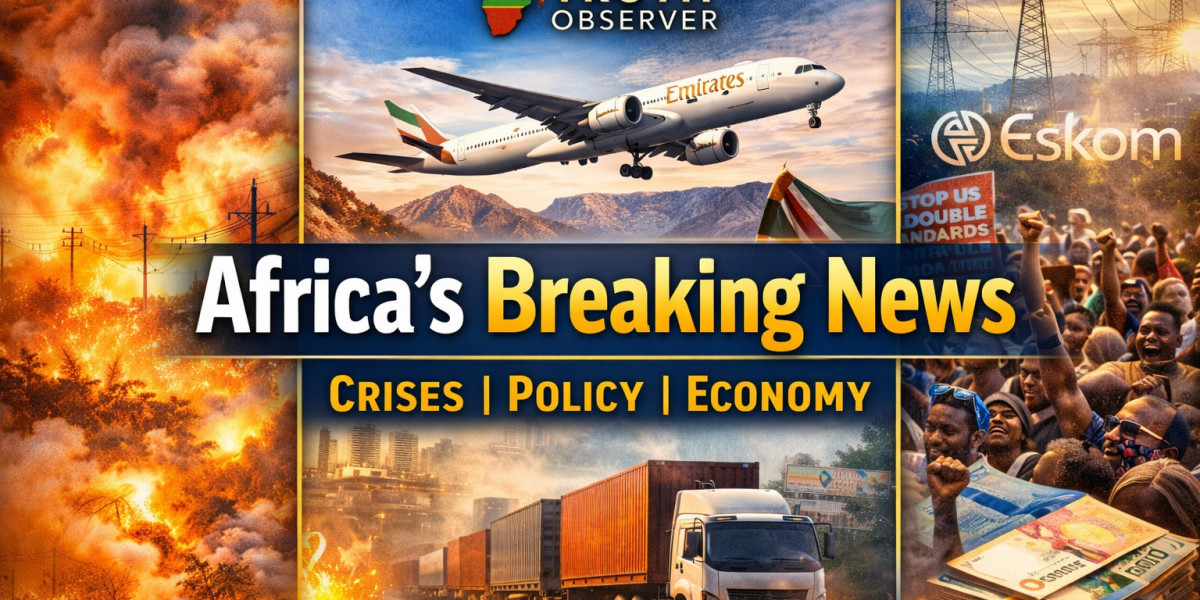

The recent wildfire alert in the Eastern Cape, which forced mass evacuations and triggered widespread power outages, highlights Africa’s growing vulnerability to climate-related disasters. These incidents disrupt local economies, damage infrastructure, and strain already pressured municipal systems. Power interruptions not only affect households but also halt industrial activity, logistics operations, and small businesses that depend on reliable electricity.
As climate risks intensify, governments are under pressure to integrate disaster preparedness into economic planning. Failure to do so threatens food security, investor confidence, and long-term development goals, particularly in regions already grappling with unemployment and service delivery backlogs.
Aviation, Connectivity, and Trade Confidence
Amid these challenges, developments in aviation and logistics offer signs of resilience. The launch of Emirates’ third daily A350 flight to Cape Town underscores the strategic importance of South Africa as a regional trade and tourism hub. Increased air connectivity enhances cargo movement, business travel, and global integration, reinforcing the role of transport infrastructure in economic recovery.
Such investments signal confidence in Africa’s markets, but they also expose inequalities. While major cities benefit from enhanced global links, secondary regions continue to face underinvestment, limiting the broader spillover benefits of international trade growth.
Political Demonstrations and Foreign Policy Tensions
In Pretoria, demonstrations targeting US policy on Venezuela reveal how global geopolitics increasingly influence domestic political expression in Africa. Civil society groups and political actors are using protests to challenge perceived double standards in international relations, particularly regarding sanctions, sovereignty, and human rights.
These demonstrations are not isolated events. They reflect a broader African demand for consistency and respect in global diplomacy. As African nations assert more independent foreign policy positions, trade and diplomatic partnerships are likely to face renewed scrutiny.
Energy Regulation and the Eskom Tariff Debate
One of the most economically significant developments remains the ongoing debate surrounding a reported R76 billion Eskom tariff error linked to regulatory decisions. The controversy has intensified criticism of energy governance and raised concerns over affordability, transparency, and institutional accountability.
Electricity pricing directly impacts manufacturing competitiveness, household welfare, and inflation. Errors at the regulatory level undermine trust and fuel public anger, especially when consumers already face rising living costs. The situation underscores the urgent need for regulatory reform, clearer oversight mechanisms, and credible communication between authorities and the public.
Social Crises and Governance Accountability
The confirmation of 48 initiation-related deaths across South Africa has shocked the nation and reignited debates about cultural practices, regulation, and the state’s duty to protect life. While traditional rites remain deeply rooted in social identity, recurring fatalities expose failures in enforcement, monitoring, and community engagement.
Such tragedies erode public confidence in governance and highlight the intersection between culture, law, and human rights. Addressing these issues requires collaboration between traditional leaders, health authorities, and law enforcement agencies.
Rising Costs and Household Pressure
Education costs continue to climb, with Grade 8 entry fees now exceeding R5,000 in many institutions. This trend places enormous strain on working-class families and risks widening inequality. When education becomes less accessible, long-term economic productivity and social mobility are compromised.
At the same time, labor disputes and job insecurity—such as those seen in major corporations—reflect deeper structural challenges in Africa’s economies. Without inclusive growth and skills development, social tension is likely to intensify.
Trade, Policy, and Regional Integration
Across SADC and the wider continent, trade policy remains a balancing act between liberalization and protection. Cross-border trade inefficiencies, regulatory inconsistencies, and logistics constraints continue to limit the full potential of regional integration. While frameworks like AfCFTA promise transformation, implementation gaps persist.
Governments must align trade ambitions with infrastructure investment, digital security, and institutional reform. Without this alignment, Africa risks repeating cycles of policy announcements without tangible impact.
A Defining Moment for African Governance
Taken together, these developments illustrate a continent at a crossroads. Environmental shocks, economic pressures, political activism, and governance failures are converging in ways that demand decisive leadership. Transparency, accountability, and inclusive policy-making are no longer optional they are essential for stability and growth.
As Africa navigates this complex landscape, Africa Truth Observer remains committed to documenting the realities shaping the continent’s future, providing clarity amid complexity, and holding power to account in an era of rapid change.