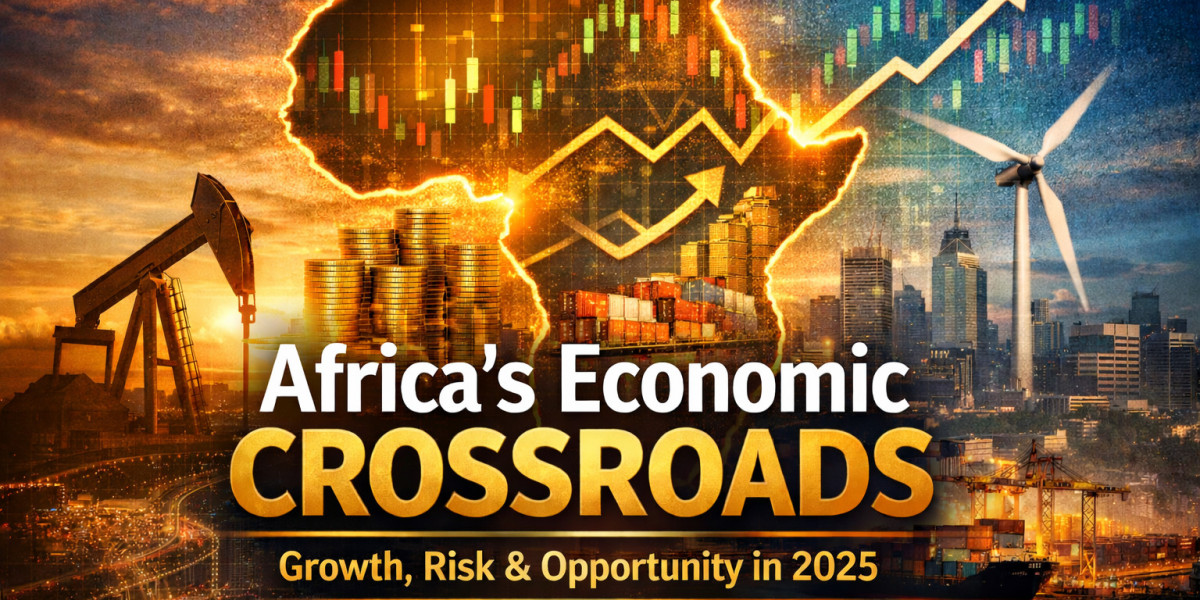

Many African economies continue to navigate the aftershocks of global inflation, high interest rates, and currency volatility. Countries heavily dependent on imports have faced rising costs of fuel, food, and industrial inputs, placing pressure on both governments and households. In response, several central banks across the continent have adopted tighter monetary policies to stabilize currencies and control inflation, even at the risk of slowing growth.
South Africa, Nigeria, Egypt, and Kenya have all taken varied approaches to balancing inflation control with economic expansion. While interest rate hikes have helped contain price pressures in some markets, they have also increased borrowing costs for businesses and consumers. This delicate balance remains one of the most critical policy challenges facing African policymakers.
Investment Flows and Capital Markets Momentum
Despite these challenges, Africa’s capital markets have shown renewed momentum. Select African stock exchanges delivered strong returns for dollar-based investors in 2025, supported by commodity price stability, improved fiscal discipline, and targeted reforms. Private equity and infrastructure funds continue to view Africa as a long-term growth destination, particularly in energy, logistics, healthcare, and digital services.
North and East Africa have emerged as key investment hubs, driven by population growth, urbanization, and improving regulatory frameworks. Cities such as Nairobi, Casablanca, Lagos, and Kigali are increasingly positioning themselves as regional financial and innovation centers, attracting both domestic and international capital.
Infrastructure and Energy as Growth Catalysts
Infrastructure development remains central to Africa’s economic transformation. Transport corridors, ports, renewable energy projects, and digital infrastructure are receiving increased attention from development finance institutions and private investors alike. Large-scale solar and wind projects in Southern and West Africa are helping diversify energy mixes while supporting climate commitments.
Access to reliable electricity continues to be a major constraint on industrial growth, particularly for small and medium-sized enterprises. However, progress in off-grid solutions, battery storage, and regional power pools is gradually improving energy security across several regions.
Trade, Tariffs, and Global Uncertainty
Africa’s trade environment is evolving against a backdrop of rising protectionism in global markets. Potential tariff increases from major economies, coupled with shifting geopolitical alliances, have forced African exporters to rethink market strategies. The African Continental Free Trade Area (AfCFTA) remains one of the continent’s most ambitious tools to mitigate external risks by strengthening intra-African trade.
Although implementation has been uneven, early gains in cross-border trade facilitation, customs digitization, and regulatory harmonization signal long-term potential. If fully realized, AfCFTA could significantly reduce Africa’s dependence on external markets while boosting regional value chains.
Social Inequality and the CEO Pay Debate
Economic growth has not been evenly distributed, and inequality remains a major concern. Rising CEO pay gaps, particularly in South Africa, have intensified debates around corporate governance, wage fairness, and social cohesion. In some sectors, executive compensation has grown hundreds of times faster than average worker earnings, raising ethical and economic questions.
Addressing inequality will require more than corporate reform. It demands coordinated action across education, skills development, tax policy, and labor market regulation. Without inclusive growth, long-term economic stability will remain fragile.
Digital Finance and Financial Inclusion
Africa’s fintech revolution continues to reshape access to financial services. Mobile payments, digital lending, and cross-border remittance platforms have expanded rapidly, especially in East and West Africa. However, the shutdown of some pioneering payment services highlights the sector’s growing pains, including regulatory pressure, competition, and sustainability challenges.
Financial inclusion remains one of Africa’s most powerful development tools. When aligned with sound regulation and consumer protection, digital finance can unlock entrepreneurship, support small businesses, and integrate millions into the formal economy.