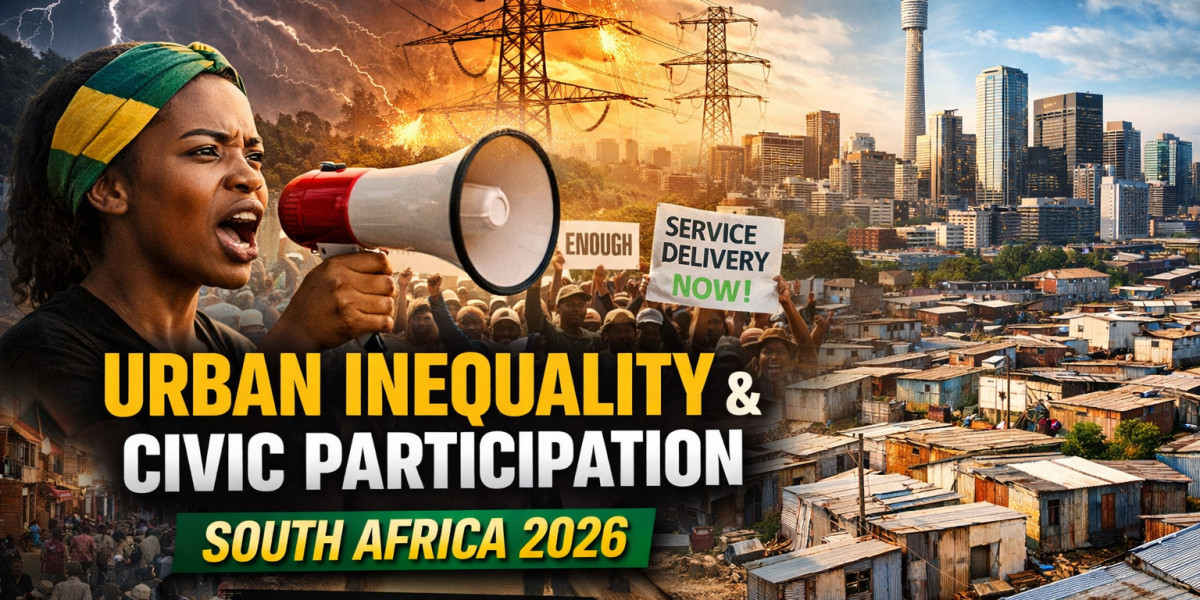

Urban inequality in South Africa is not accidental. It is rooted in historical spatial planning that deliberately separated communities along racial and economic lines. Despite political transformation, many cities still follow these patterns. Townships and informal settlements remain far from economic centers, forcing residents to spend large portions of their income and time on transport. This physical separation limits access to jobs, quality education, healthcare, and opportunities for upward mobility.
Service delivery remains one of the clearest indicators of inequality in urban areas. Many communities experience frequent electricity disruptions, water shortages, poor sanitation, and deteriorating roads. These issues are often concentrated in low-income neighborhoods, reinforcing perceptions that some citizens are treated as less important than others. When basic services fail, trust in local government erodes, creating tension between residents and municipal authorities.
Civic participation has become a key response to these challenges. Across South Africa, communities are organizing through civic forums, neighborhood associations, and social movements to demand accountability. Service delivery protests, while sometimes controversial, reflect deeper frustrations with governance failures and unresponsive institutions. For many marginalized communities, protest is not a choice but a last resort after formal channels of engagement have failed.
However, access to civic participation is itself unequal. Middle- and upper-income residents often have greater access to legal resources, media platforms, and digital tools that allow them to influence decision-making more effectively. Poorer communities may lack the same visibility and institutional access, limiting their ability to shape policy outcomes. This imbalance raises important questions about inclusivity in South Africa’s democratic processes.
Housing is another major driver of urban inequality. Rapid urbanization continues as people migrate to cities in search of employment and better living conditions. Yet the supply of affordable housing has not kept pace with demand. Informal settlements have expanded, often in areas vulnerable to flooding, fires, and environmental hazards. While government housing programs exist, slow implementation, corruption, and limited community consultation have reduced their effectiveness.
Youth unemployment further intensifies urban social pressures. Cities are home to millions of young people who struggle to find stable employment or meaningful economic opportunities. Without access to jobs, training, or entrepreneurship support, many young residents feel excluded from the urban economy. This exclusion increases the risk of social unrest, crime, and long-term economic stagnation. Encouraging youth participation in local governance and development initiatives is essential for sustainable urban growth.
Technology plays an increasingly important role in shaping civic engagement. Digital platforms allow communities to report service failures, organize campaigns, and access information more easily. Smart city initiatives promise greater efficiency and transparency. However, the digital divide remains a serious challenge. Many low-income residents lack affordable internet access or digital literacy, limiting their ability to participate fully in online civic spaces.
Local government capacity is central to addressing these issues. Municipalities are responsible for service delivery, urban planning, and community engagement, yet many struggle with financial constraints, skills shortages, and political instability. Strengthening local governance requires more than policy reform; it demands genuine partnerships between authorities and residents. Participatory budgeting, transparent decision-making, and regular community consultations can help rebuild trust and improve outcomes.
As South Africa approaches the latter half of the decade, the future of its cities will play a decisive role in national development. Urban inequality threatens social cohesion, economic growth, and democratic stability if left unaddressed. At the same time, strong civic participation offers a pathway toward more inclusive and responsive governance. When citizens are meaningfully involved, cities become more resilient and equitable.
In the end, addressing urban inequality requires coordinated action across government, civil society, and communities themselves. Infrastructure investment must be matched with inclusive governance and social justice. By documenting these challenges, amplifying community voices, and holding institutions accountable, Mzansi Urban Report contributes to a deeper understanding of South Africa’s urban realities and the urgent need for citizen-centered solutions.