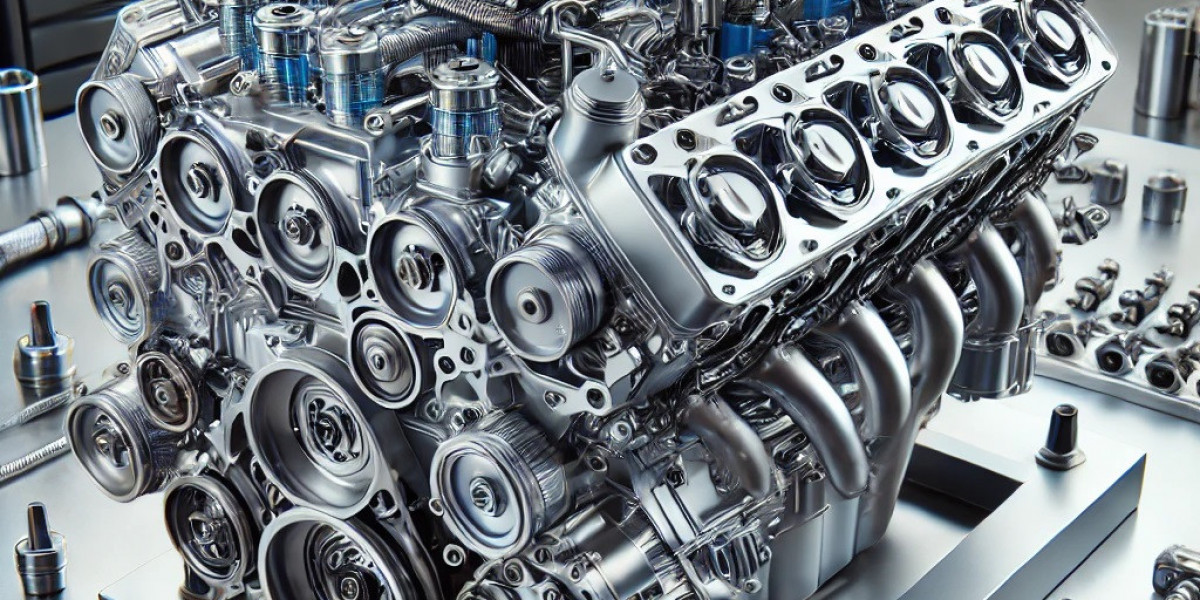
The K20 engine is one of Honda’s most legendary and respected powerplants. Known for its high-revving performance, exceptional reliability, and massive aftermarket support, the K20 has become a top choice for enthusiasts, tuners, and engine swap projects worldwide. Whether used in factory performance cars or custom builds, the K20 continues to deliver impressive results.
What Is the K20 Engine?
The Honda K20 is a 2.0-liter inline-four (I4) engine introduced in the early 2000s as part of Honda’s K-series lineup. It features dual overhead camshafts (DOHC), 16 valves, and i-VTEC technology, allowing it to balance fuel efficiency with strong high-RPM performance.
The K20 replaced the older B-series engines and quickly became a favorite due to its modern design and tuning potential.
K20 Engine Specifications
Displacement: 2.0L (1998 cc)
Configuration: Inline 4-cylinder
Valvetrain: DOHC, 16-valve with i-VTEC
Block / Head: Aluminum
Fuel System: Multi-port fuel injection
Horsepower: 150–220 hp (depending on variant)
Redline: Up to 8,600 RPM (performance models)
Fuel Type: Premium recommended (Type R / Si variants)
Popular K20 Engine Variants
The K20 family includes several versions designed for different purposes:
K20A / K20A2 – High-performance versions used in Type R and Acura RSX Type-S
K20Z1 / K20Z3 – Found in later Civic Si models
K20A3 – Economy-focused version with lower power output
Each variant offers different tuning and performance capabilities.
Vehicles That Use the K20 Engine
The K20 engine came factory-installed in several popular models, including:
Honda Civic Si
Acura RSX
Honda Integra Type R
Honda Accord (select markets)
Honda CR-V (early generations)
Its compatibility makes it a popular choice for swaps into Civics, Integras, and track builds.
Why the K20 Engine Is So Popular
High-Revving Performance
Smooth power delivery with strong top-end acceleration.
Outstanding Reliability
With proper maintenance, many K20 engines exceed 200,000–250,000 miles.
Massive Aftermarket Support
Easy access to performance parts, tuning software, and upgrades.
Swap-Friendly Design
One of the most commonly swapped Honda engines.
Common K20 Engine Problems
While highly reliable, some known issues include:
Timing chain tensioner wear
VTC actuator noise during cold starts
Valve clearance adjustment needs
Oil consumption in high-mileage engines
Routine maintenance prevents most long-term problems.
K20 Engine Replacement Options
Used K20 Engine
Most affordable option
OEM factory engine
Ideal for budget repairs and swaps
Rebuilt K20 Engine
Replaced wear components
Improved reliability
Moderate cost
Performance-Built K20 Engine
Forged internals
Turbo or track-ready
Capable of high horsepower builds
Installation & Maintenance Tips
Use high-quality synthetic oil
Adjust valve clearances regularly
Replace timing components during installation
Tune the ECU properly
Use quality fuel for high-performance variants
Good maintenance greatly extends engine lifespan.
K20 vs K24 – Which One Is Better?
The K20 excels in high-RPM performance and sporty driving, while the K24 offers more low-end torque. Many enthusiasts combine a K24 block with a K20 head for an ideal hybrid setup.
Final Thoughts
The K20 engine remains one of the best four-cylinder engines ever produced. Its combination of performance, reliability, and tuning potential makes it ideal for daily drivers, race cars, and engine swap projects.
Whether you’re restoring a Honda or building a high-performance setup, the K20 engine delivers proven power and long-term value.