
Introduction
India is one of the fastest-growing consumer markets in the world, attracting manufacturers from across the globe. However, before foreign manufacturers can sell regulated products in India, they must comply with Indian quality and safety standards. This is where the BIS FMCS Scheme becomes essential.
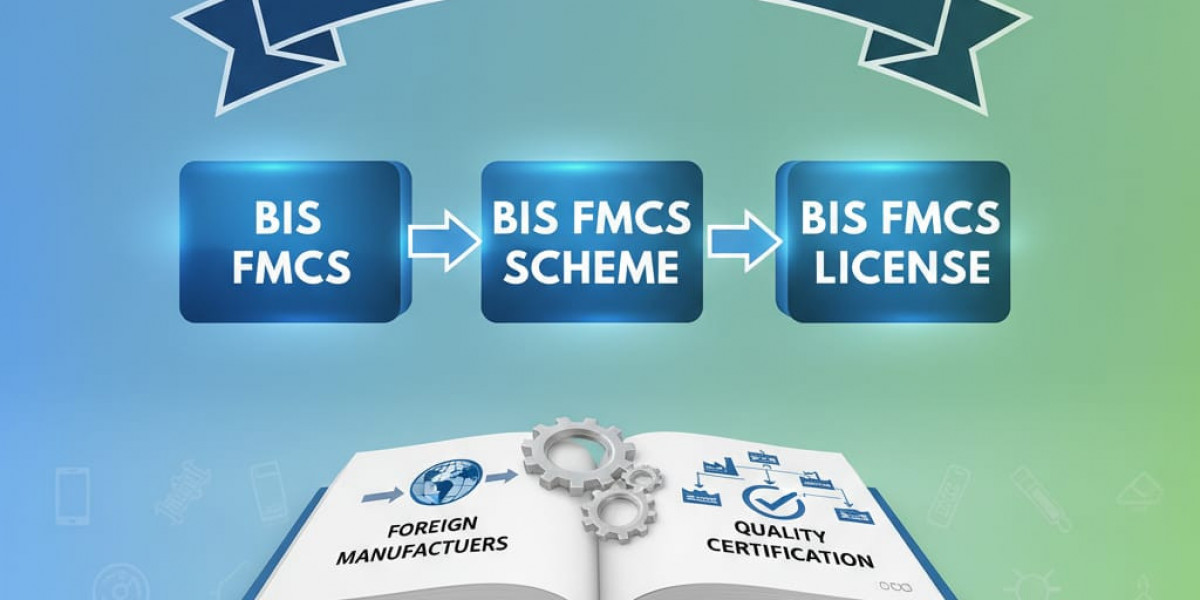
The Foreign Manufacturers Certification Scheme (FMCS) is designed specifically for overseas manufacturers who want to export their products to India. Through BIS FMCS Certification, manufacturers receive authorization to use the BIS Standard Mark, ensuring compliance with Indian Standards.
This blog provides a detailed explanation of the BIS FMCS Scheme, BIS FMCS License, and BIS FMCS Certificate, along with benefits, process, and key requirements.
What is the BIS FMCS Scheme?
The BIS FMCS Scheme stands for Foreign Manufacturers Certification Scheme. It is a certification system introduced by the Bureau of Indian Standards (BIS) for manufacturers located outside India.
Under this scheme, foreign manufacturers can obtain approval to use the BIS Standard Mark (ISI mark) on products that fall under mandatory BIS certification.
The BIS FMCS Scheme applies to products such as:
Electrical appliances
Steel and metal products
Cement
Automotive components
Industrial equipment
Without BIS FMCS Certification, foreign manufacturers are not permitted to export or sell regulated products in the Indian market.
What is a BIS FMCS License?
A BIS FMCS License is an official authorization issued by BIS to a foreign manufacturer after successful evaluation of their manufacturing facility, product testing, and quality control systems.
The license allows:
Use of the BIS Standard Mark
Legal export of products to India
Compliance with Indian Standards (IS)
The BIS FMCS License is granted product-wise and manufacturing location-wise, meaning each product and factory requires separate approval.
What is a BIS FMCS Certificate?
The BIS FMCS Certificate is the documentary proof that confirms a foreign manufacturer’s compliance with BIS standards. It certifies that the product has passed laboratory testing and factory inspection conducted by BIS officials.
This certificate is crucial for:
Customs clearance in India
Market acceptance
Avoiding penalties and import restrictions
The BIS FMCS Certificate remains valid as long as the license is maintained and surveillance requirements are fulfilled.
BIS FMCS Certification Process
The BIS FMCS Certification process involves multiple technical and compliance steps. Below is an overview:
Step 1: Identify Applicable Indian Standard
Determine the relevant Indian Standard (IS) for the product under the BIS FMCS Scheme.
Step 2: Nomination of Authorized Indian Representative (AIR)
Foreign manufacturers must appoint an Authorized Indian Representative (AIR) who will act as a liaison with BIS.
Step 3: Product Testing
Product samples are tested in BIS-recognized laboratories to ensure compliance with Indian Standards.
Step 4: Application Submission
The manufacturer submits the application along with:
Test reports
Factory details
Quality manuals
Manufacturing process documents
Step 5: Factory Inspection
BIS officials conduct an on-site inspection of the foreign manufacturing unit.
Step 6: Grant of BIS FMCS License
Upon successful evaluation, BIS issues the BIS FMCS License and allows use of the BIS Standard Mark.
Documents Required for BIS FMCS Certification
Key documents include:
Manufacturing license
Factory layout and machinery list
Quality control procedures
Test reports
Appointment letter of AIR
Trademark documents
Proper documentation significantly reduces approval delays.
Benefits of BIS FMCS Scheme
The BIS FMCS Scheme offers several advantages to foreign manufacturers:
Legal entry into the Indian market
Increased consumer trust
Compliance with Indian regulations
Reduced risk of product rejection
Competitive advantage over uncertified products
Obtaining BIS FMCS Certification enhances brand reputation and ensures smooth business operations in India.
Common Challenges in BIS FMCS Certification
Foreign manufacturers often face challenges such as:
Understanding Indian Standards
Managing factory inspections abroad
Delays in test reports
Communication barriers with authorities
Expert support helps overcome these challenges efficiently.
Conclusion
The sunconsultants.co.in is a mandatory compliance pathway for foreign manufacturers aiming to sell regulated products in India. Obtaining a BIS FMCS License and BIS FMCS Certificate ensures product quality, safety, and legal market access. With increasing regulatory scrutiny, timely BIS FMCS Certification is essential for uninterrupted imports and long-term business success.